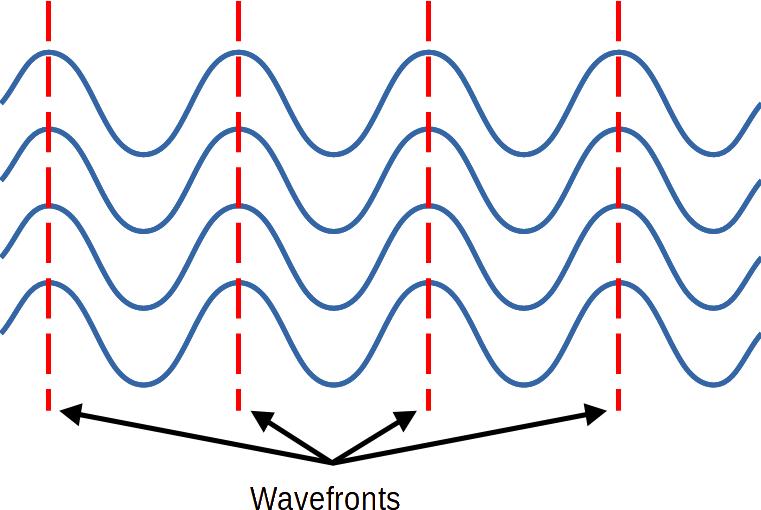
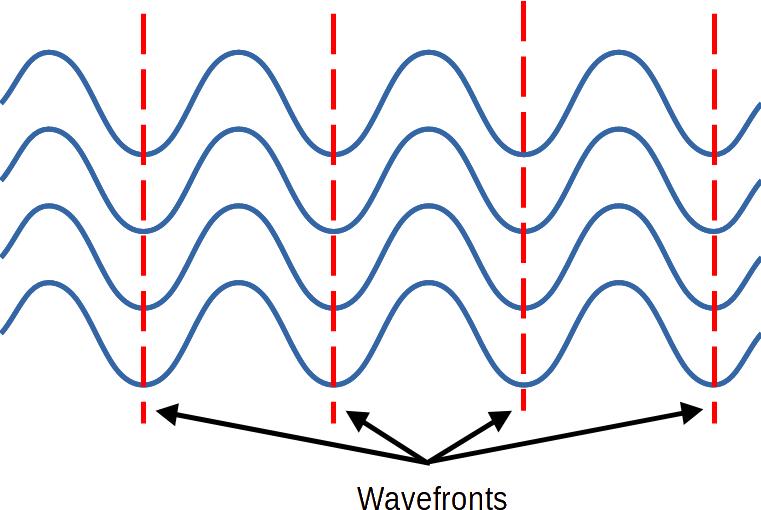
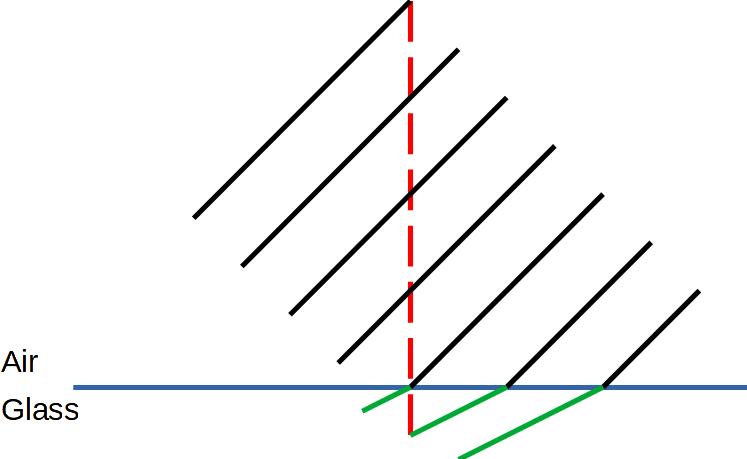
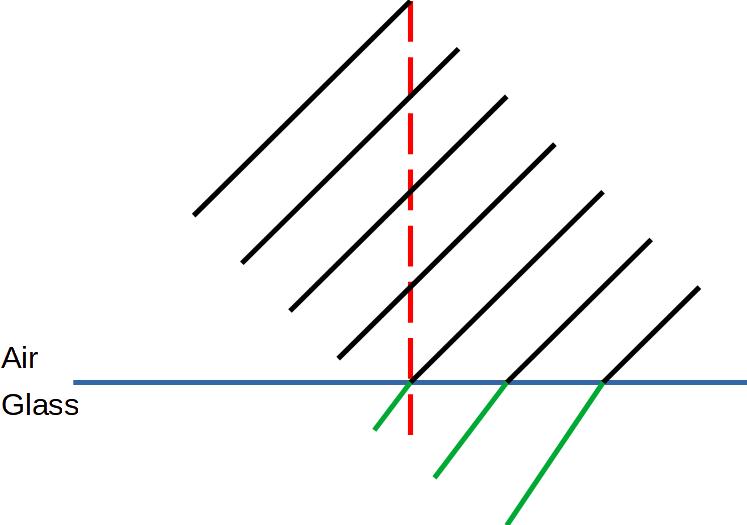
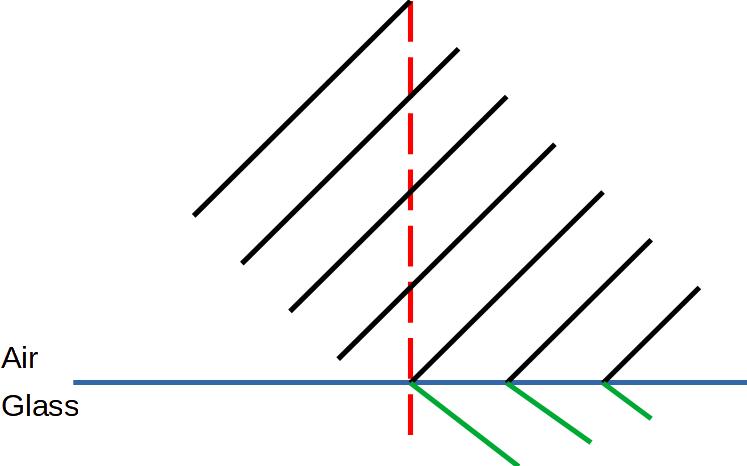
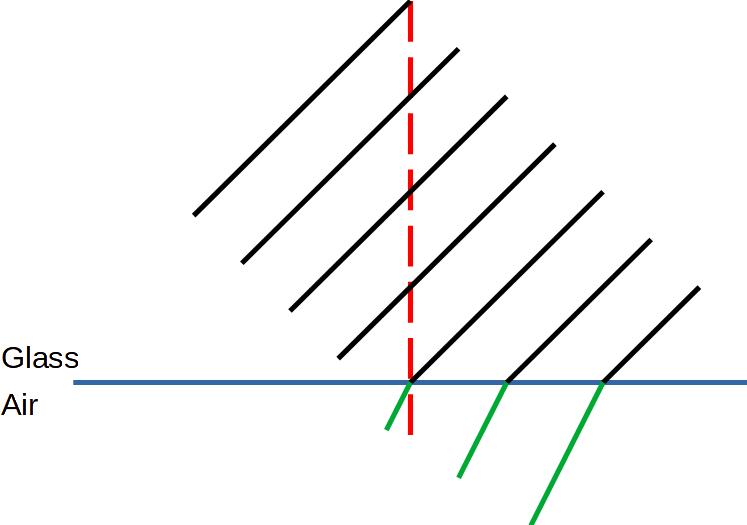
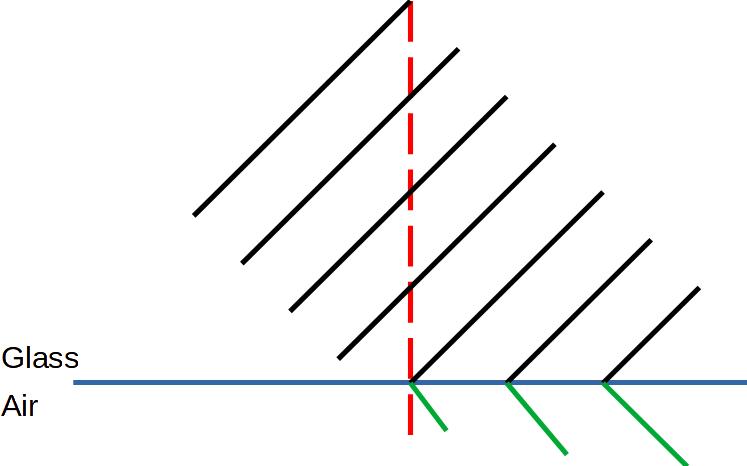
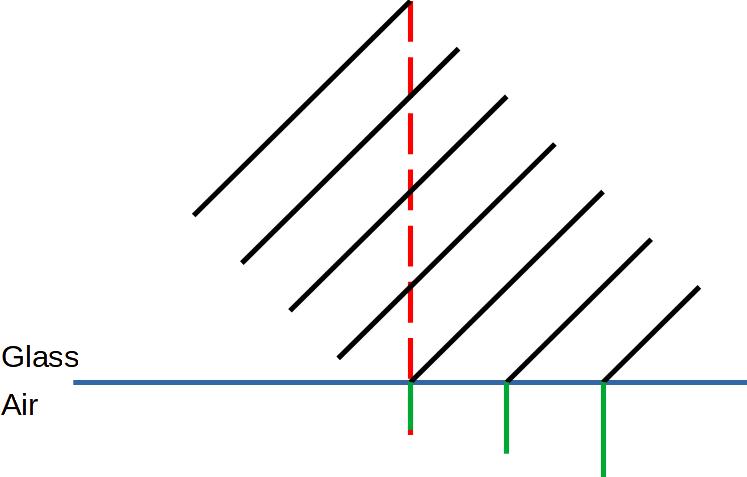
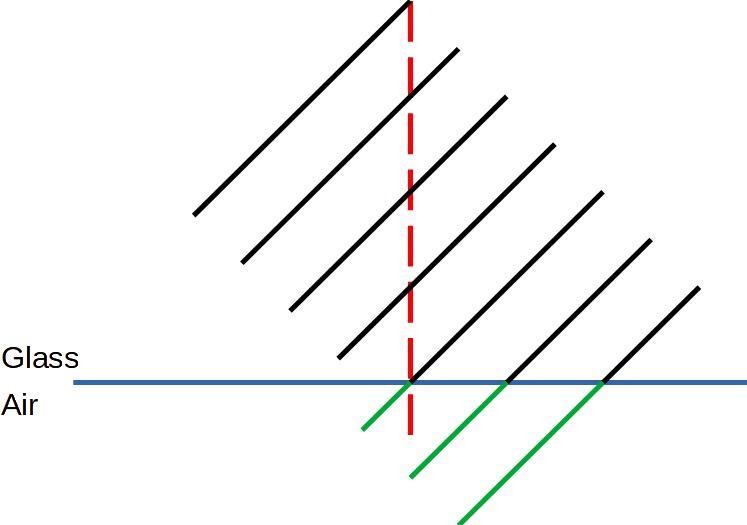
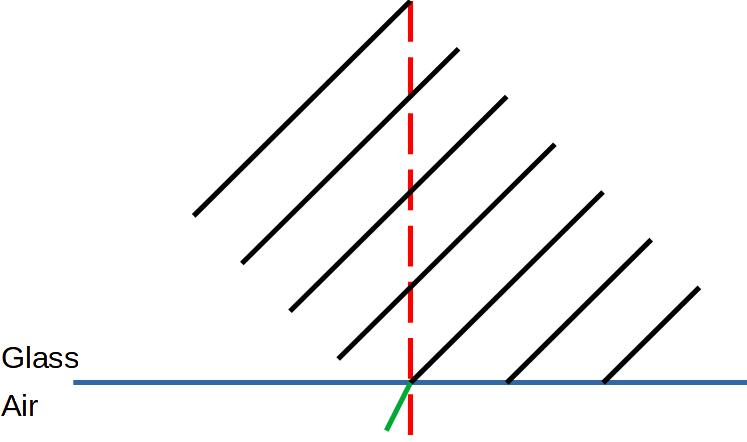
| ppefmh | Ed | Garstin | 2/6 | The diagram below shows transverse waves. All the waves have the same wavelength and speed. | 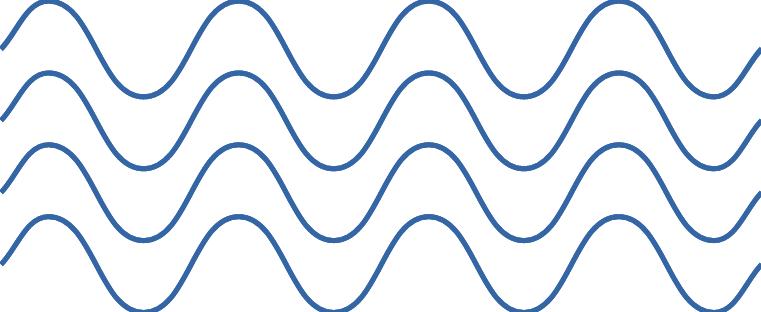 | | Wavefronts can be used to explain why light rays can change direction when they pass from one medium to another. | 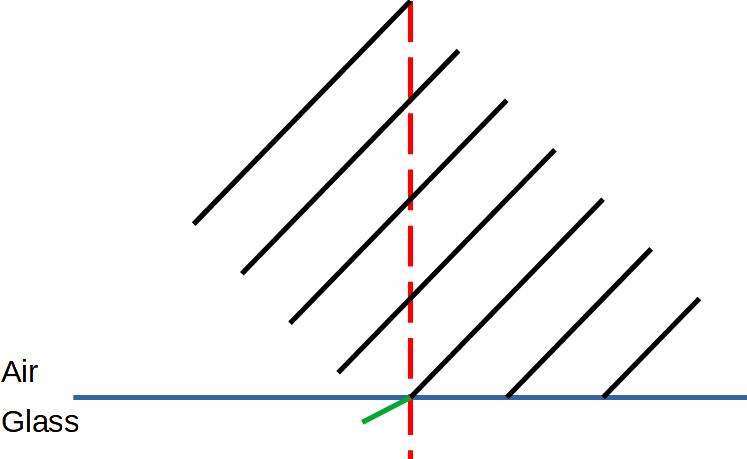 | |
-
When the first wavefront starts to move into the glass, those parts of the wavefront slow down.

-
Those parts of the wavefront now get closer together.

-
The wavelength of the waves decreases.
-
The wave changes direction towards the normal.
-
When the first wavefront starts to move out of the glass, those parts of the wavefront speed up.
-
Those parts of the wavefront now get further apart.
-
The wavelength of the waves increases.
-
The wave changes direction away from the normal.
|  | |
-
When the first wavefront starts to move into the glass, those parts of the wavefront slow down.
-
Those parts of the wavefront now get closer together.
-
The wavelength of the waves decreases.
-
The wave changes direction towards the normal.
-
When the first wavefront starts to move out of the glass, those parts of the wavefront speed up.
-
Those parts of the wavefront now get further apart.
-
The wavelength of the waves increases.
-
The wave changes direction away from the normal.
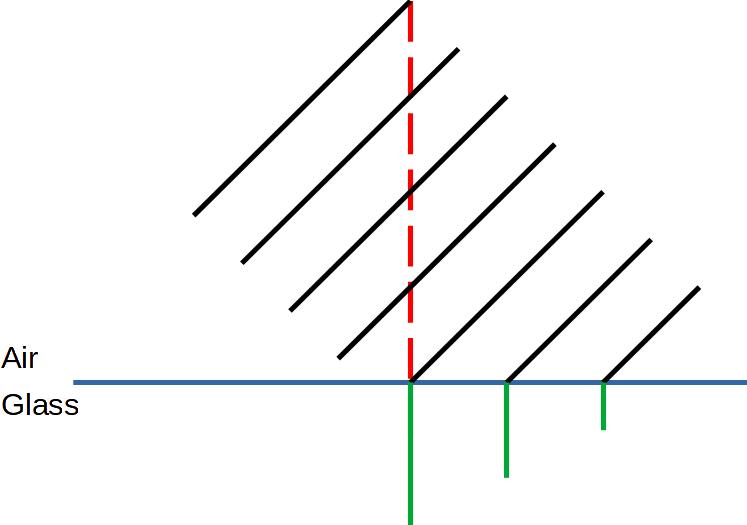
| The diagram below shows a light wave passing from one medium to another along the normal. | 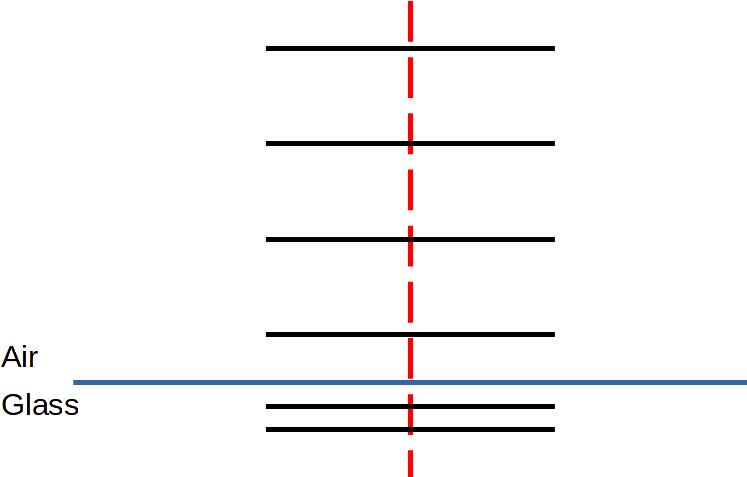 |
-
When wavefronts travel along the normal, the whole wavefront enters the glass at the same time. This means that each part of the wavefront slows down together and the wave does not change direction.
-
When wavefronts travel along the normal, the whole wavefront enters the glass at different times. This means that each part of the wavefront slows down together and the wave does not change direction.
-
When wavefronts travel along the normal, half of the wavefront enters the glass at the same time. This means that each part of the wavefront slows down together and the wave does not change direction.
| 33% |