| ppefmh | Ed | Garstin | 1/4 | The diagrams below show the patterns of S waves and P waves after an earthquake. | 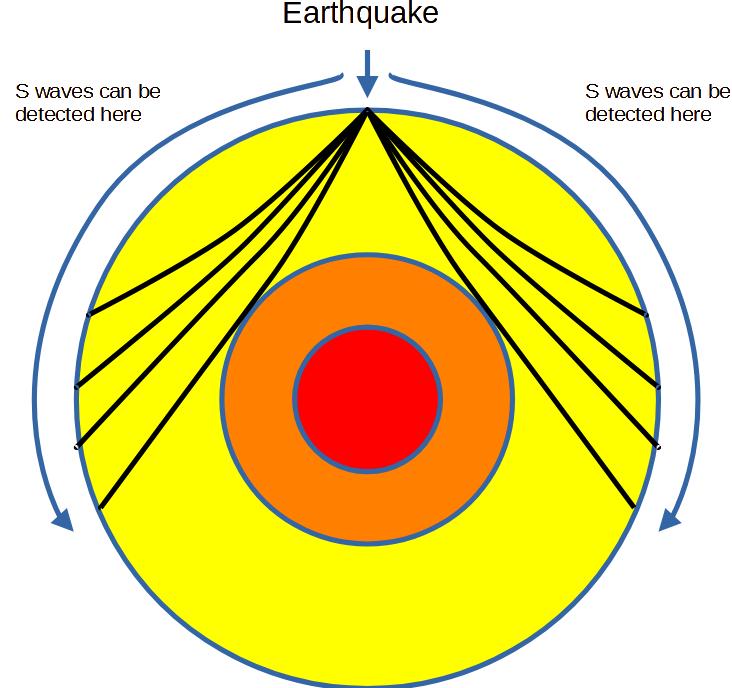 | 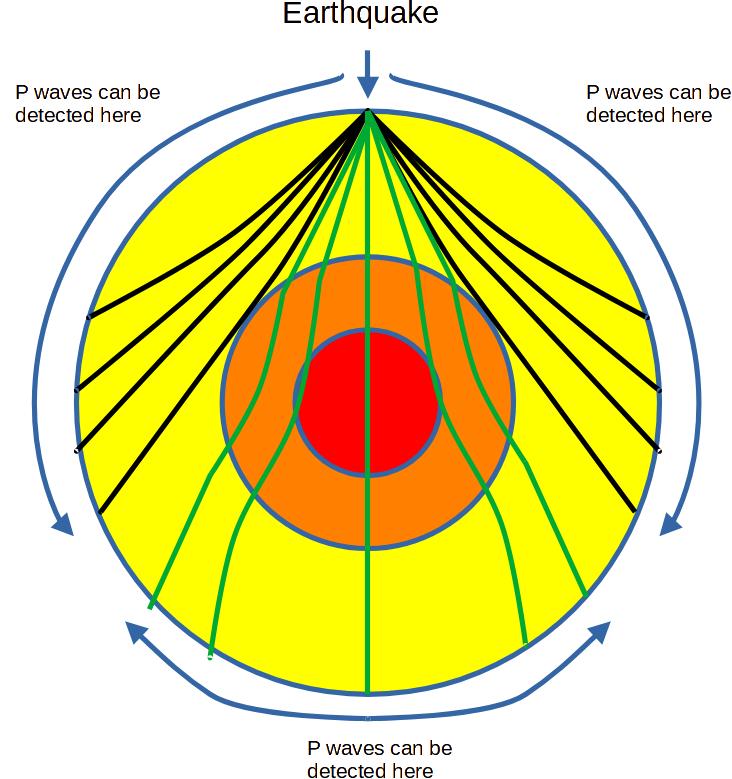 |
-
This is due to the Earth's rotation.

-
This is due to the Earth's magnetic field.
-
This is due to the density changes in the Earth's interior?
| Regions where S waves cannot be detected are called the S wave shadow zone. | 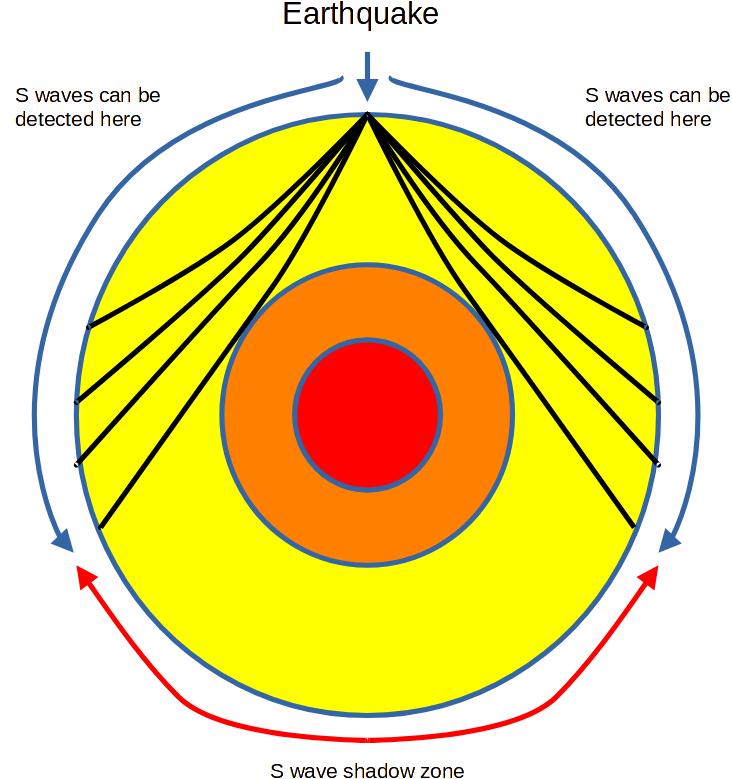 |
-
S waves are transverse waves and cannot travel through liquids. This means that S waves cannot pass through the outer core (which is a liquid). As we can see from the diagram above.
-
S waves are longitudinal waves and cannot travel through liquids. This means that S waves cannot pass through the outer core (which is a liquid). As we can see from the diagram above.
-
S waves are magnetically charged waves and cannot travel through liquids. This means that S waves cannot pass through the outer core (which is a liquid). As we can see from the diagram above.
| Regions where P waves cannot be detected are called the P wave shadow zone. | 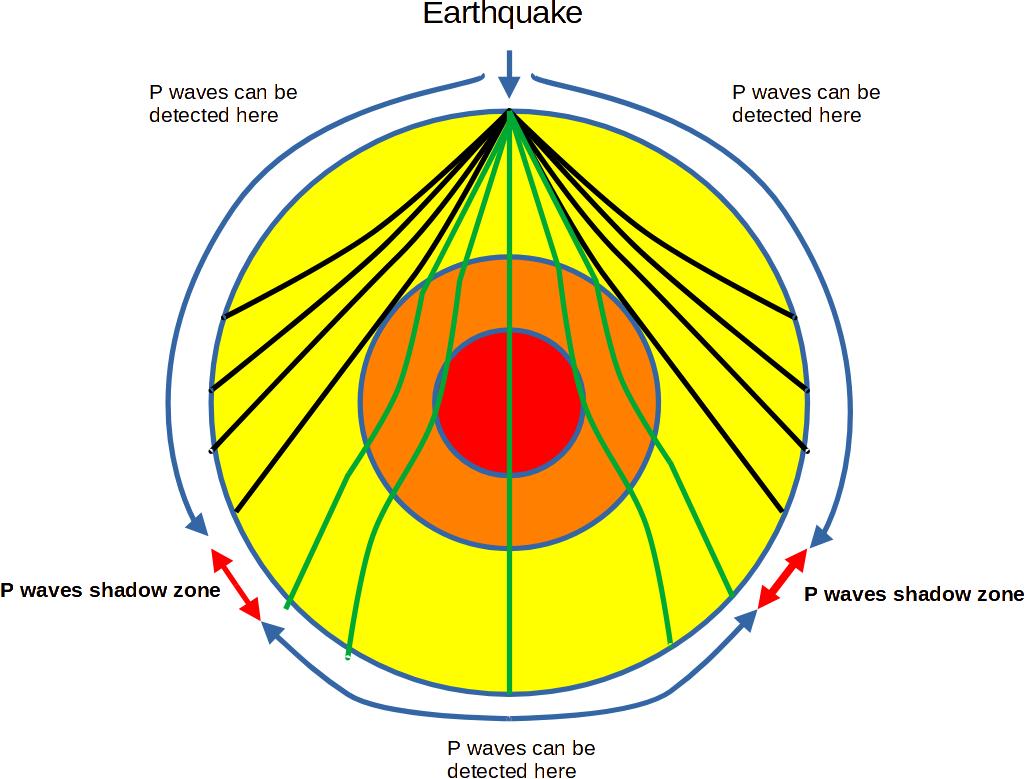 |
-
P waves travel faster in solids than in liquids. This means that when P waves enter the liquid outer core, they slow down. This causes them to change direction (refract). They also refract when they pass out of the outer core. This means that P waves do not pass into the P wave shadow zones.
-
P waves travel slower in solids than in liquids. This means that when P waves enter the liquid inner core, they slow down. This causes them to change direction (refract). They also refract when they pass out of the inner core. This means that P waves do not pass into the P wave shadow zones.
-
P waves travel faster in liquids than in solids. This means that when P waves enter the liquid outer core, they slow down. This causes them to change direction (refract). They also refract when they pass out of the outer core. This means that P waves do not pass into the P wave shadow zones.
|
-
Very faint P waves can sometimes be detected in the P wave shadow zone. This told scientists that the Earth must contain a solid inner core.

-
Very faint S waves can sometimes be detected in the P wave shadow zone. This told scientists that the Earth must contain a solid inner core.
-
Very faint P waves can sometimes be detected in the S wave shadow zone. This told scientists that the Earth must contain a solid inner core.
| 25% |
| ppefmh | Ed | Garstin | 0/4 | The diagrams below show the patterns of S waves and P waves after an earthquake. | | |
-
This is due to the Earth's rotation.
-
This is due to the Earth's magnetic field.
-
This is due to the density changes in the Earth's interior?
| Regions where S waves cannot be detected are called the S wave shadow zone. | |
-
S waves are transverse waves and cannot travel through liquids. This means that S waves cannot pass through the outer core (which is a liquid). As we can see from the diagram above.
-
S waves are longitudinal waves and cannot travel through liquids. This means that S waves cannot pass through the outer core (which is a liquid). As we can see from the diagram above.
-
S waves are magnetically charged waves and cannot travel through liquids. This means that S waves cannot pass through the outer core (which is a liquid). As we can see from the diagram above.
| Regions where P waves cannot be detected are called the P wave shadow zone. | |
-
P waves travel faster in solids than in liquids. This means that when P waves enter the liquid outer core, they slow down. This causes them to change direction (refract). They also refract when they pass out of the outer core. This means that P waves do not pass into the P wave shadow zones.
-
P waves travel slower in solids than in liquids. This means that when P waves enter the liquid inner core, they slow down. This causes them to change direction (refract). They also refract when they pass out of the inner core. This means that P waves do not pass into the P wave shadow zones.
-
P waves travel faster in liquids than in solids. This means that when P waves enter the liquid outer core, they slow down. This causes them to change direction (refract). They also refract when they pass out of the outer core. This means that P waves do not pass into the P wave shadow zones.
|
-
Very faint P waves can sometimes be detected in the P wave shadow zone. This told scientists that the Earth must contain a solid inner core.
-
Very faint S waves can sometimes be detected in the P wave shadow zone. This told scientists that the Earth must contain a solid inner core.
-
Very faint P waves can sometimes be detected in the S wave shadow zone. This told scientists that the Earth must contain a solid inner core.
| 0% |
