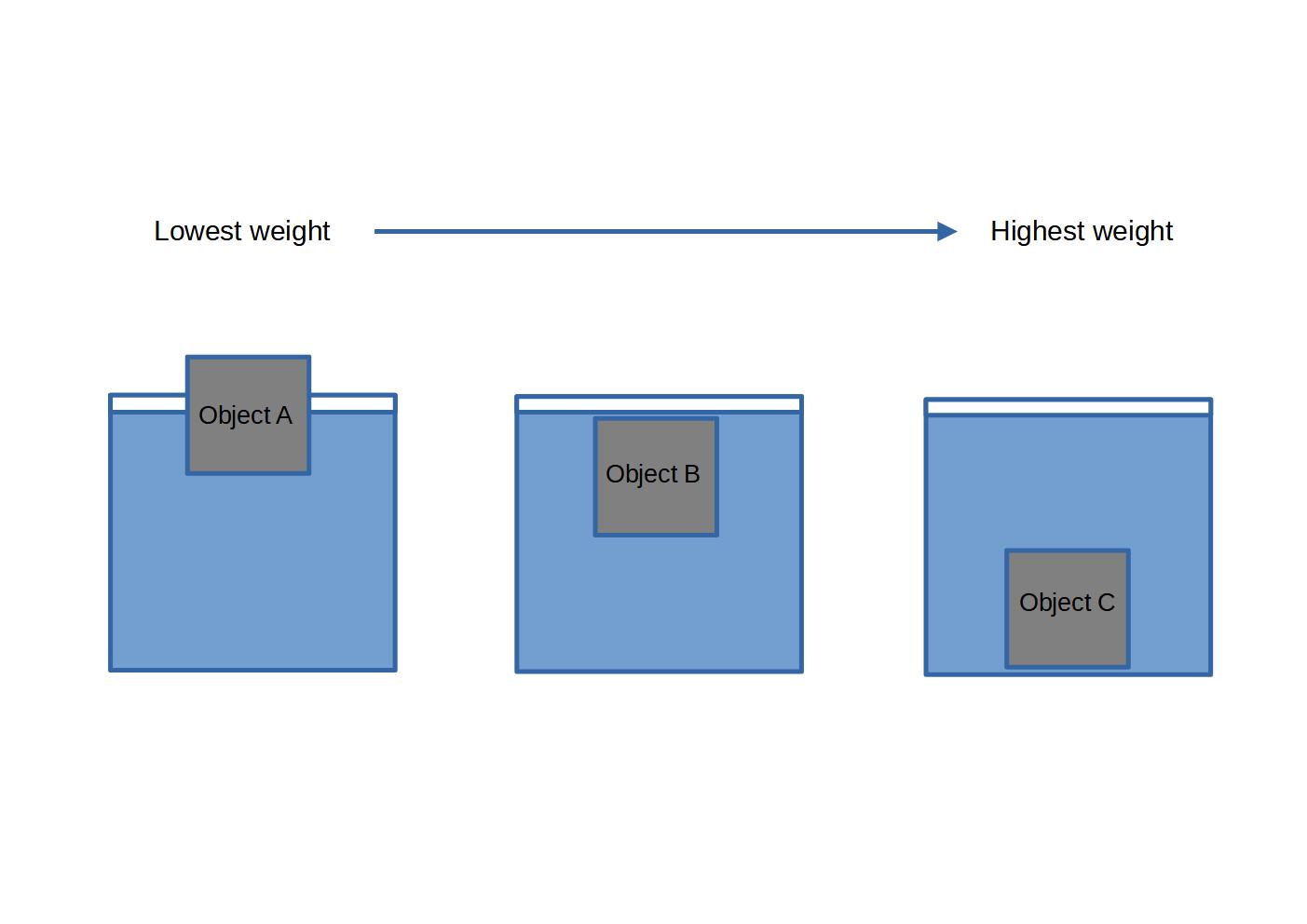
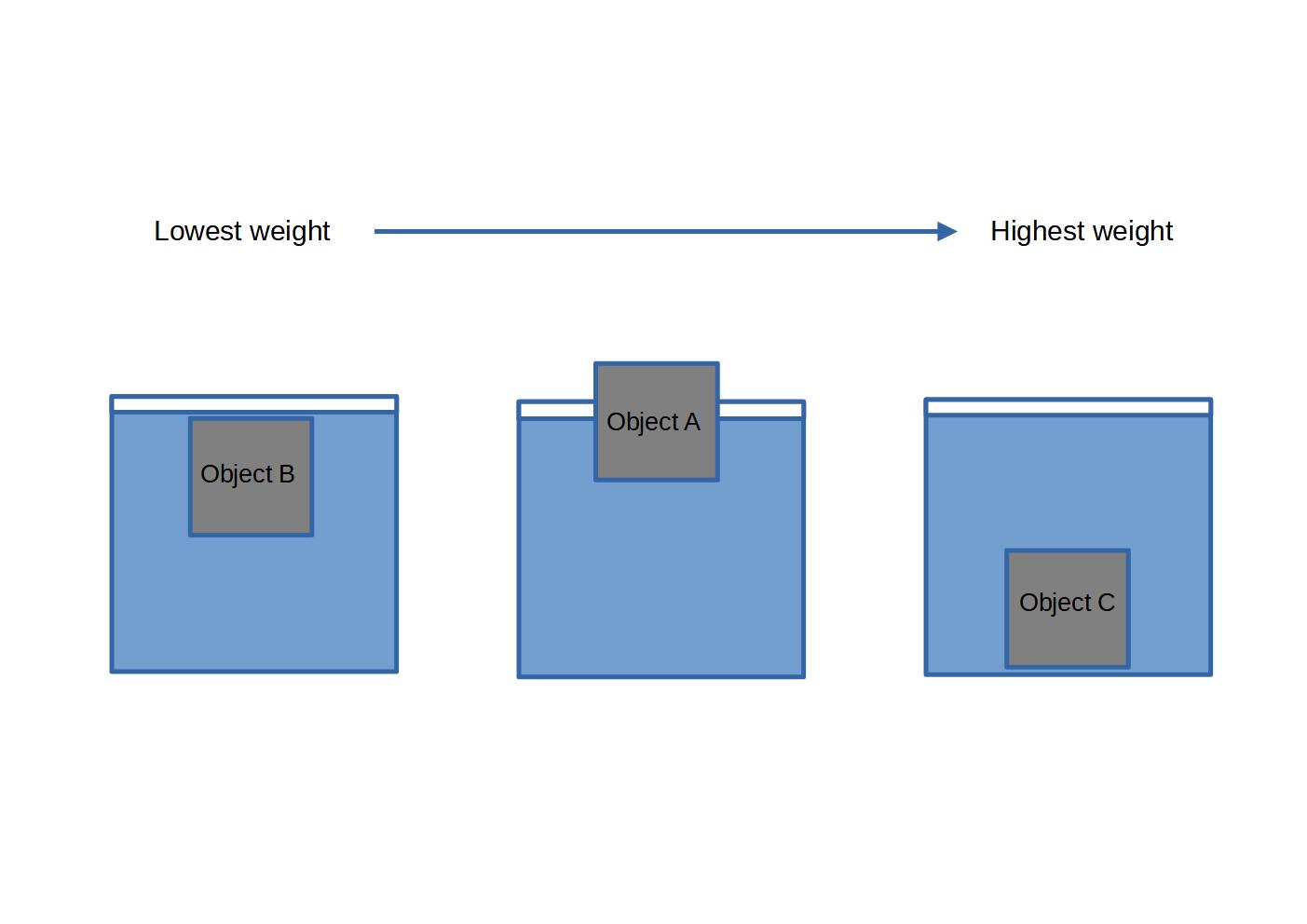
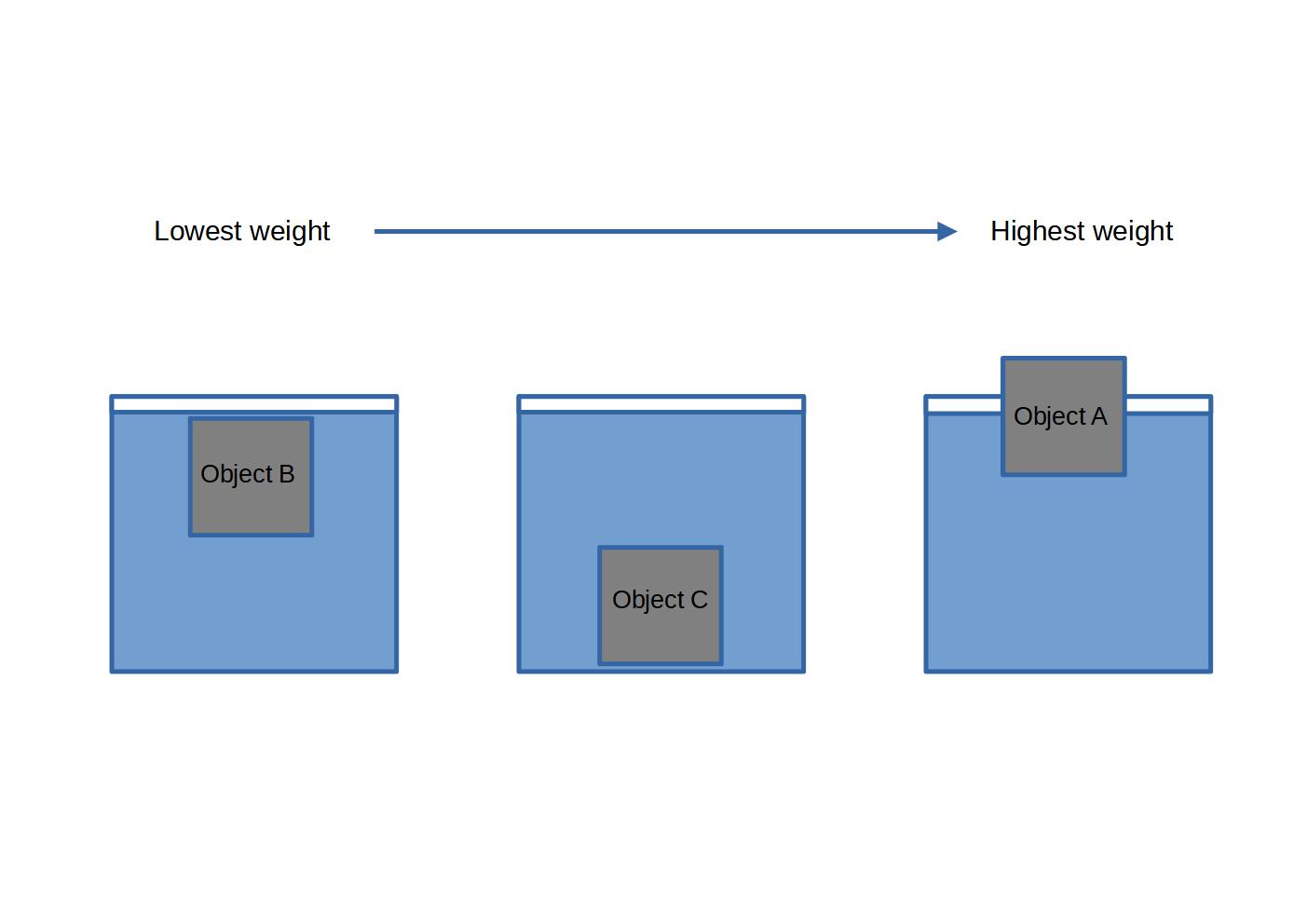
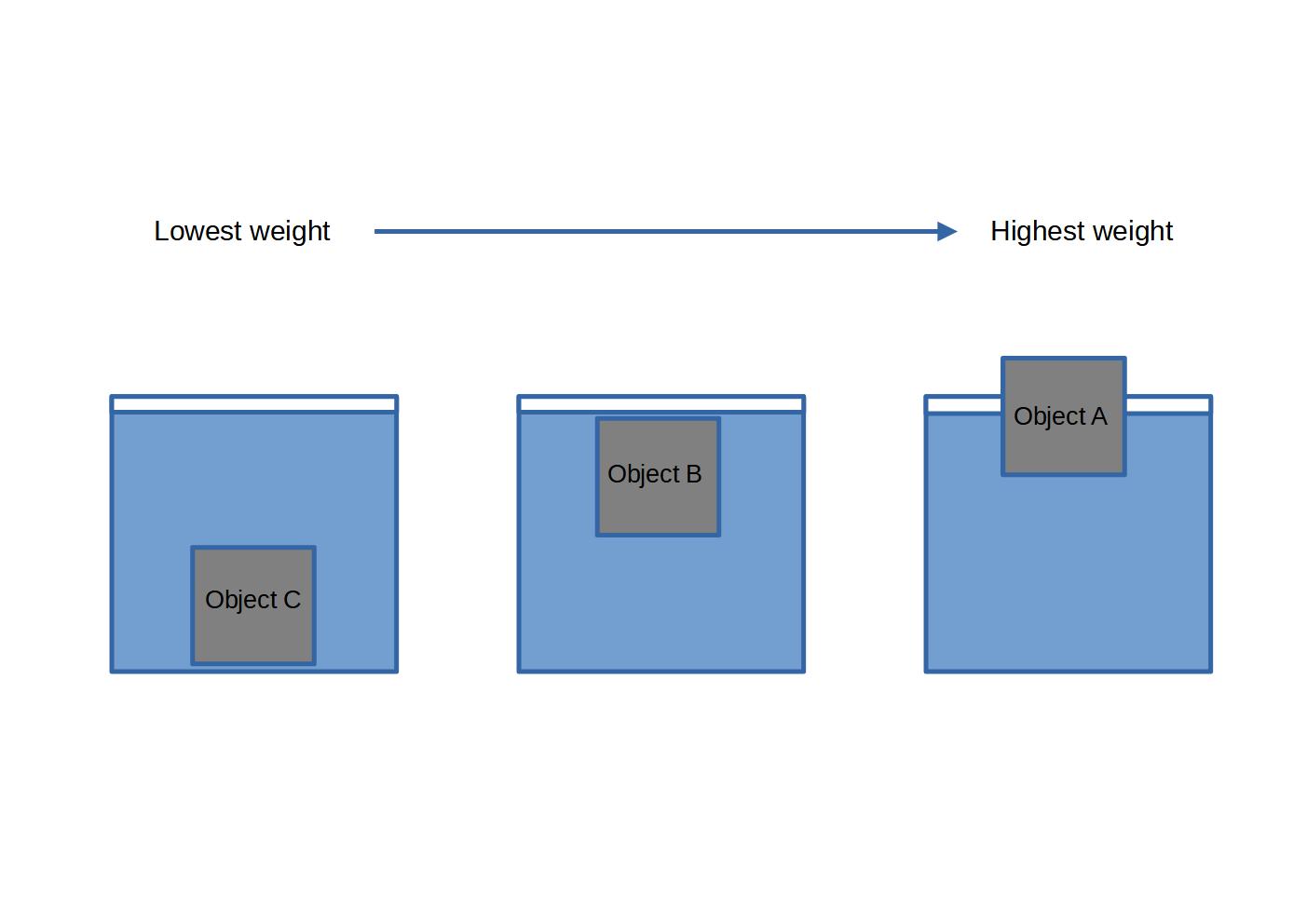
| ppefmh | Ed | Garstin | 0/6 | The diagram below shows 3 objects in a liquid. | 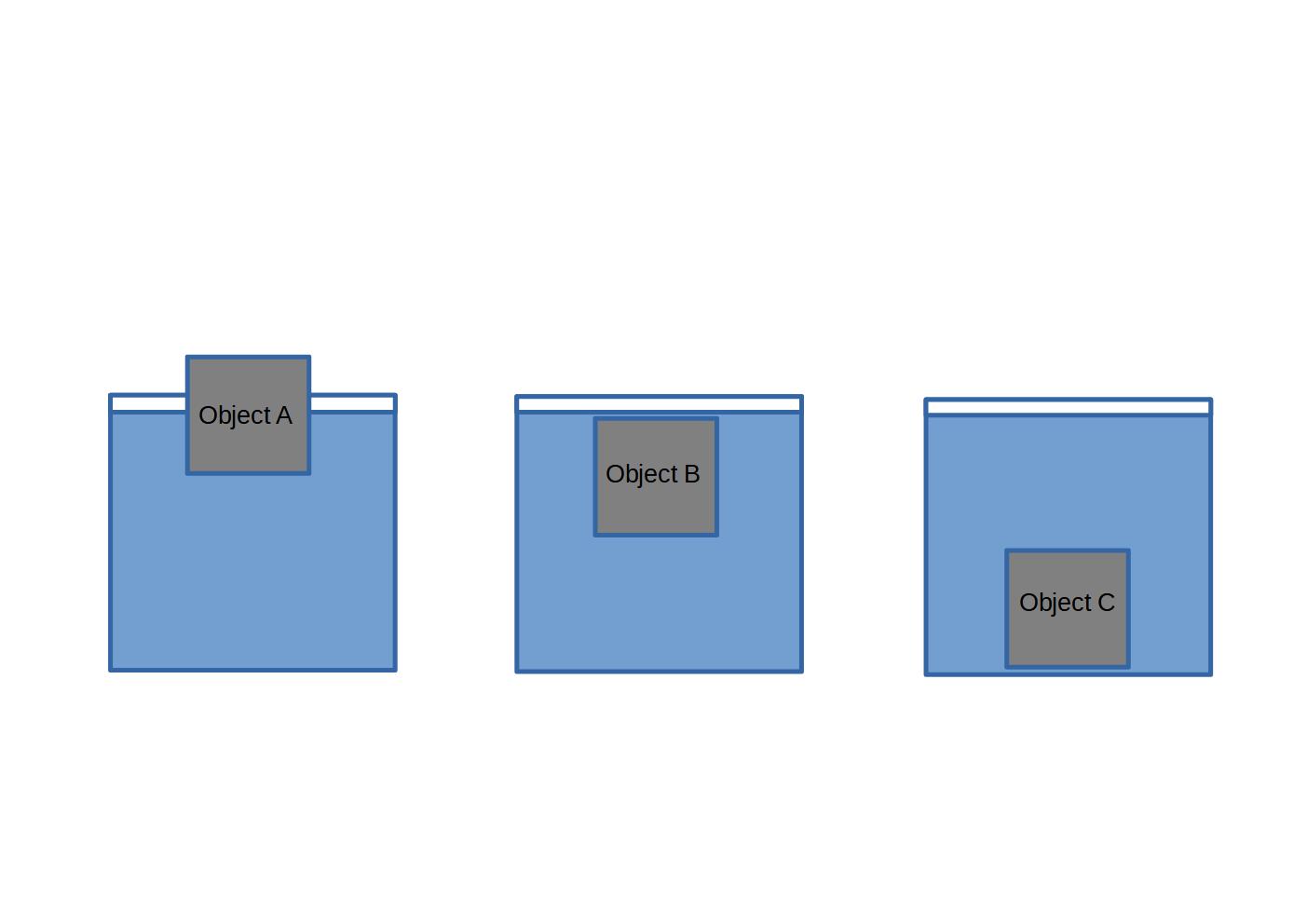 | |
-
The object has the same density as the liquid.
-
The object is more dense than the liquid.
-
The object is less dense than the liquid.

-
Even when the object displaces its entire volume of water is still cannot displace enough water to equal its own weight.
-
This object only has to displace a small volume of water to displace its own weight.
-
To displace its own weight, this object must displace a volume if water equal to its own volume.
|
-
The object has the same density as the liquid.
-
The object is more dense than the liquid.
-
The object is less dense than the liquid.
-
Even when the object displaces its entire volume of water is still cannot displace enough water to equal its own weight.
-
This object only has to displace a small volume of water to displace its own weight.
-
To displace its own weight, this object must displace a volume if water equal to its own volume.

|
-
The object has the same density as the liquid.
-
The object is more dense than the liquid.
-
The object is less dense than the liquid.
-
Even when the object displaces its entire volume of water is still cannot displace enough water to equal its own weight.
-
This object only has to displace a small volume of water to displace its own weight.
-
To displace its own weight, this object must displace a volume if water equal to its own volume.
|
-
The weight of object C is greater than upthrust. This is because object C has sunk. If the weight of the object is greater than the upthrust then it will sink.
-
The weight of object A is greater than upthrust. This is because object A has sunk. If the weight of the object is greater than the upthrust then it will sink.
-
The weight of object B is greater than upthrust. This is because object B has sunk. If the weight of the object is greater than the upthrust then it will sink.
| | 0% |