Sound Waves 3

Displaying 1 - 1 of 1

FirstFirstLastQuiz Score TotalQuestion 33a) What is the main problem with representing sound waves using a cathode ray oscilloscope?Image 3bImage 3b1Image 3b2Image 3b3Image 3b43bi) What is to correct description of Trace A?3bii) What is to correct description of Trace B?3biii) What is to correct description of Trace C?3biiii) What is to correct description of Trace D?3ci) Select the correct statement below?3cii) Select the correct statement below?Quiz Percentage Grade
ppefmhEdGarstin4/7Sound waves cannot be viewed directly. However, if we connect a microphone to a cathode ray oscilloscope, we get an idea of the feature of sound waves.
  • In solids, the particles are closer together than the particles in air. This means that when sound waves pass through solids, the vibrations can pass more easily between the particles than when sound waves pass through air. This means that the speed of sound in a solid is greater than the speed of sound in air.
  • In solids, the particles are further apart than the particles in air. This means that when sound waves pass through solids, the vibrations can pass more easily between the particles than when sound waves pass through air. This means that the speed of sound in a solid is greater than the speed of sound in air.
  • In solids, the particles are the same distance as the particles in air. This means that when sound waves pass through solids, the vibrations can pass less easily between the particles than when sound waves pass through air. This means that the speed of sound in a solid is than the speed of sound in air.
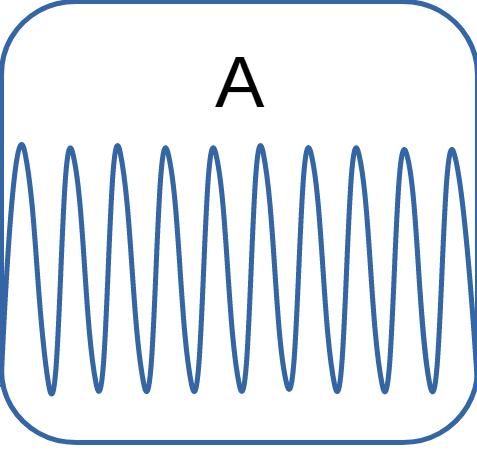
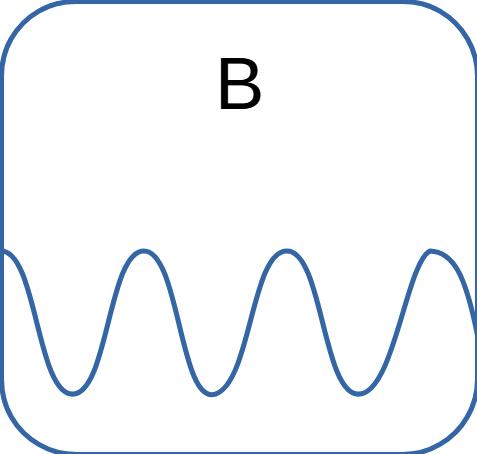
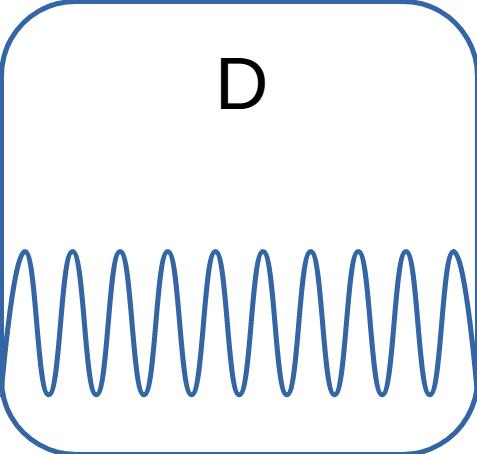
The diagrams below shows four sound waves shown on a cathode ray oscilloscope.

Assume that the time shown on each screen is the same for each diagram.

  • This is a relatively quiet sound with a high pitch.
  • This is a relatively loud sound with a high pitch.
  • This is a relatively quiet sound with a low pitch.
  • This is a relatively loud sound with a low pitch.
  • This is a relatively quiet sound with a high pitch.
  • This is a relatively loud sound with a high pitch.
  • This is a relatively quiet sound with a low pitch.
  • This is a relatively loud sound with a low pitch.
  • This is a relatively quiet sound with a high pitch.
  • This is a relatively loud sound with a high pitch.
  • This is a relatively quiet sound with a low pitch.
  • This is a relatively loud sound with a low pitch.
  • This is a relatively quiet sound with a high pitch.
  • This is a relatively loud sound with a high pitch.
  • This is a relatively quiet sound with a low pitch.
  • This is a relatively loud sound with a low pitch.
  • Louder sounds have a greater amplitude than quieter sounds.
  • Louder sounds have a greater frequency than quieter sounds.
  • Higher pitched sounds have a greater amplitude than lower pitched sounds.
  • Higher pitched sounds have a greater frequency than lower pitched sounds.
57%
FirstFirstLastQuiz Score TotalQuestion 33a) What is the main problem with representing sound waves using a cathode ray oscilloscope?Image 3bImage 3b1Image 3b2Image 3b3Image 3b43bi) What is to correct description of Trace A?3bii) What is to correct description of Trace B?3biii) What is to correct description of Trace C?3biiii) What is to correct description of Trace D?3ci) Select the correct statement below?3cii) Select the correct statement below?Quiz Percentage Grade