
Vector Diagrams 2a
| First | First | Last | Results | Question 2a | Image 2a | [z] has a length of | In the diagram above 1 cm = | Calculate the resultant force? | Correct Answer | Round Answer | Show your workings: |
|---|---|---|---|---|---|---|---|---|---|---|---|
| ppefmh | Ed | Garstin | Incorrect | When forces are acting at an angle, we find the resultant force by constructing a vector diagram. Use the vector diagram below to work out the resultant force produced by the forces shown. | 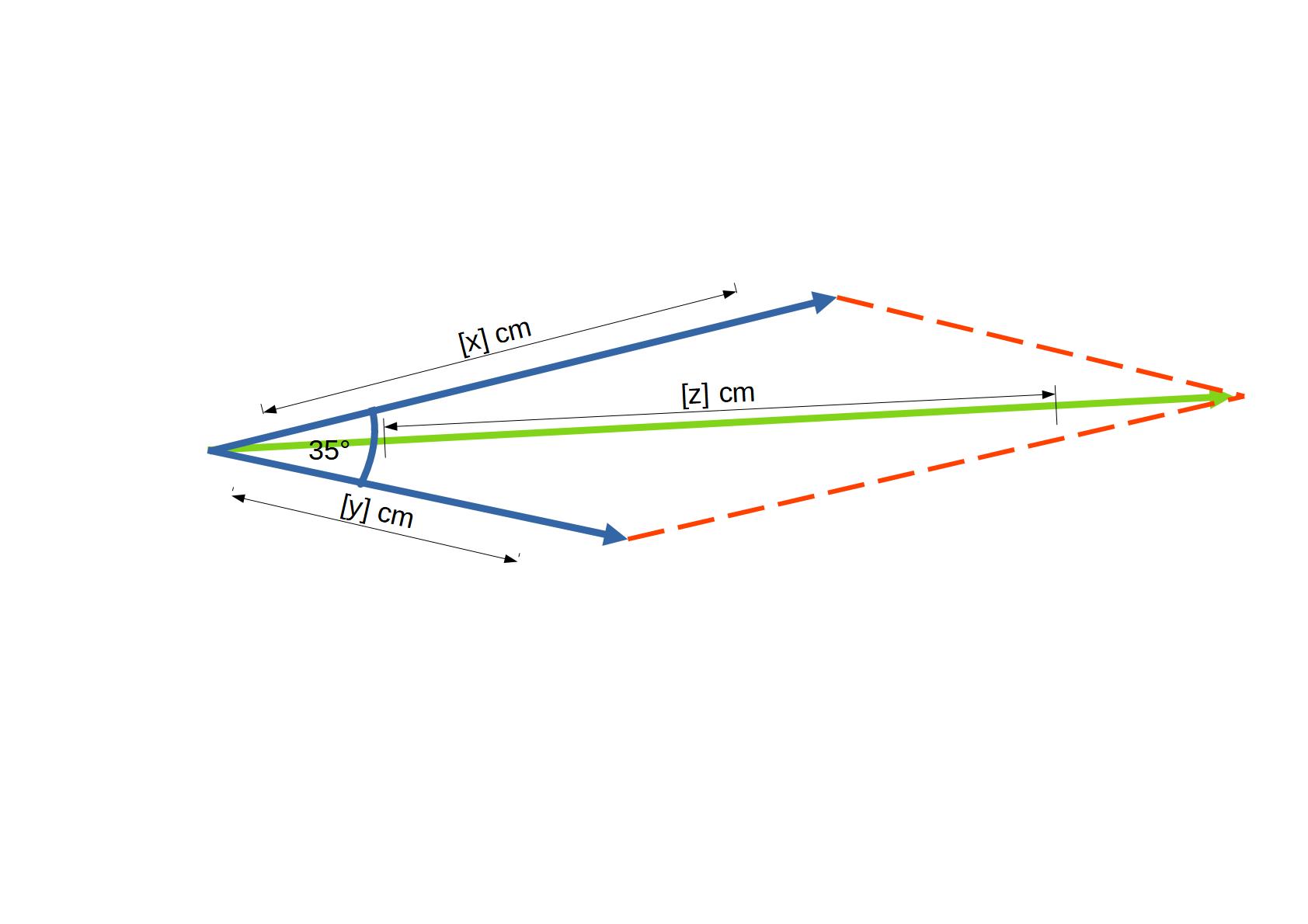 | 1.3 | 56 | 54 | 72.8 | 72.8 | gfd |
| ppefmh | Ed | Garstin | Incorrect | When forces are acting at an angle, we find the resultant force by constructing a vector diagram. Use the vector diagram below to work out the resultant force produced by the forces shown. | | 4.5 | 48 | 543 | 216 | 216 | fdf |
| ppefmh | Ed | Garstin | Incorrect | When forces are acting at an angle, we find the resultant force by constructing a vector diagram. Use the vector diagram below to work out the resultant force produced by the forces shown. | | 2.8 | 30 | 54 | 84 | 84 | fgc |
| First | First | Last | Results | Question 2a | Image 2a | [z] has a length of | In the diagram above 1 cm = | Calculate the resultant force? | Correct Answer | Round Answer | Show your workings: |